Huawei,Samsung made Paper fold smart phone!

When it comes to Huawei, you shouldn’t get your hopes too high because the tech giant is famous for being excessive when marketing its product.

The stale-state of the Android tablet scene has left Apple grabbing all the glory through the iPads but that wasn’t quite the case last year. In 2017, Huawei injected new life into the dead tablet market through launching the M5 and many are pleased with the slate.


Take the old Google Nexus 6P as an example. The device was developed by Huawei and the China-based company was loud in marketing a camera-tuned variant called the 6P DSLR. The end product has been nothing but disappointing.

Today, reports are claiming that Huawei will become the world’s first manufacturer to release a foldable smartphone. The world’s first claim suggests on the use of a foldable display instead of having two screens attached through a thick hinge like the one from ZTE several years ago.

It is much like what Samsung is hoping to offer in the near future through the W2018 concept device and Huawei wants to beat its South Korean rival to the foldable throne. More details on the said device will get revealed in November this year.


It is pretty obvious that Huawei will take it as a warning sign ahead of the release of the Mediapad M6 hence they will need to work on a similar foldable feature to stay ahead of the game.

Lenovo take’s Apple No.1 Place

Good laptops is Faster and complete the tasks as we need. Great laptops make you faster. On the strength of world-class business systems like the X1 Carbon, which helps you to get your work done more than any one, and elegant cYoga 920, which have good battery timing and can work 24 hours with out any issue (good battery timing), Lenovo has won Laptop Mag’s Best and Worst Brand ratings for the second year in a row.

Apple, the former champion, dropped all the way to seventh place in the rankings, which are scored based on innovation, design, support / warranty, value and selection and, most of all, product quality. HP and Dell placed second and third while Acer, Asus, Microsoft, Razer, MSI and Samsungtook up the other positions

Lenovo has a reasonable reputation as the king of productivity. With their focus on long battery life and great usage, Lenovo’s best laptops, especially its ThinkPads, take away some of the annoying resistance that prevents you from completing your tasks. Using one is like upgrading your hands and brain from a Core i5 to a Core i7.

Take for example, the ThinkPad X1 Carbon (6th Gen), the only laptop to earn a perfect 5-star score from Laptop Mag in the past year. The X1 Carbon’s best-in-class, responsive keyboard makes it feel like you’ve got a partner pushing your weary fingers back up as you type. If you’re like me (and still love pointing sticks), you can use the TrackPoint to navigate around the desktop, without lifting your hands off of the keyboard in order to tap the touchpad.

You don’t have to waste time whipping out dongles either as the X1 Carbon is one of the few super-thin laptops that still has full-size USB ports. And, with over 11 hours of endurance and fast-charging, you don’t need to waste time sitting by the outlet.

But people cannot live on productivity alone. Lenovo also earned high marks for the gorgeous Yoga 920 2-in-1 with its iconic watchband hinge and 10-hour battery life and the Legion Y920 gaming laptop, which offers powerful performance and a mechanical keyboard. In all, Lenovo notebooks received 10 Laptop Mag Editor’s Choice awards, 3 more than their nearest competitor.Of course, Lenovo isn’t the only PC vendor that makes great laptops. Every manufacturer, even last-place Samsung, has its bright spots. HP nearly overtook Lenovo, because of fantastic, highly-rated products like the Envy 13t, which sports a keyboard that can compete with any ThinkPad’s, and the beautiful Spectre x360. Dell has the best consumer laptop in the XPS 13 and the top gaming rig in the Alienware 17.


Tectificator Observation:
                                            So Lenovo is doing great job to tackle Apple in Market and Prove his ability. Also think that as so far it becomes a Brand as now days apple is in starting this brand facing issues but now it is the leading brand in market with respect to its reviews.


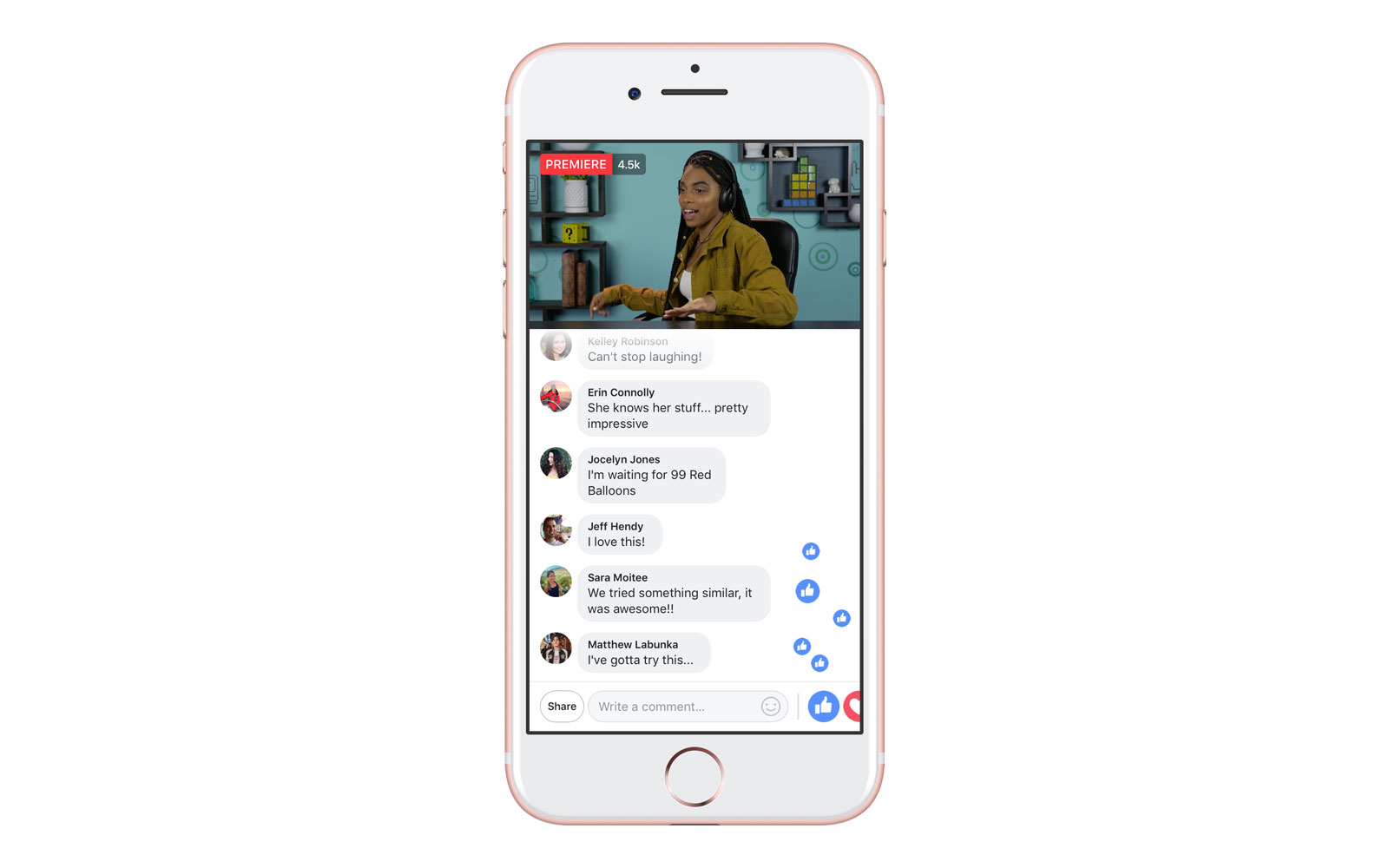
Facebook New feature 2018 to turn recorded video premieres into live events Like You tube

If you watch enough Twitch channels, you may have seen a Premiere — a pre-recorded video that Streams on channel as a live stream. It lets broadcasters recreate the thrill and excitement you’d expect from a TV show premiere, just in an online format. Sound like a good idea? Facebook agrees. It’s testing Premieres, an option that lets creators launch recoreded videos as Facebook Live stream, complete with real-time chats. You can check out a movie trailer or Watch show at the same time as everyone else, rather than compete with your friends to watch before them and if you couldn’t do that your friends spoil everything.
The initial testers include an annoying amount of creators, publishers and shows, but the feature should be available “more broadly” in the near future.
While Premieres isn’t exactly original, it makes eminent sense given Facebook’s increasing emphasis on Watch originals and the nature of many videos you find on Facebook like You tube. It helps producers build hype by giving viewers a specific time to visit their pages, complete with the pop-up notifications you don’t get with regular video posts. And just like a TV premiere, it could create virtual watercooler talk that leads others to wonder what the buzz was about and check out a video themselves. It might also spur the growth of Facebook Live. The format is already successful with over 2 billion streams to date, and that’s from truly live events — it could get yet another boost from recorded clips.

Google Tracking you and your data Like Facebook | Report 2018

Google knows every website you go, who your friends are (via Contacts) and maybe even where you travel to (via Google Maps).

OPINION: After years of warnings about being careful with your personal data online, people are finally waking up to how much tech companies know about them.

While Facebook has taken the brunt of the recent criticism, Google also has a vast amount of data about you.

Internet users do more than three billion searches on Google every day and all the data is kept and used to help them sell more ads.


READ MORE: It’s not just Facebook – companies from Trade Me to the bank use your data

While it’s easy to find out what data Google has on you, it’s hard to escape. Even if you delete your activity, the company still keeps some basic personal data.

And the more you use Google products, the more useful they become. For example, you can set a work and home address in Google Maps so when you search for a destination it can tell you how far it is from work or home. But if you do that you’re giving them key personal information which can also be used by other Google apps.

Also, Google’s suite of services makes it inconvenient to leave. Gmail, Maps, Docs, Chrome Sheets, and Drive are all great products, but get even better when used in conjunction with each other.

So what are your options?

First, take a look at what Google knows about you (visit myactivity.google.com) or download it (takeout.google.com). If you’re happy with it having that data then you can keep on using Google apps for free and in exchange allow it to track and keep your information.


The other option is to lock down some of the settings, for example blocking your location.

Your final option is to leave Google. You can delete all the data Google knows about you and start using other apps.

Start by using DuckDuckGo, a search engine that doesn’t track you online. For navigating around town you could download the Navmii app, and maybe look at Firefox to replace Chrome as a web browser. Instead of Gmail, try Kolab Now or FastMail and for documents you could try Microsoft Office or Zoho Docs.

It takes a buffet of apps to replace Google, but it is possible to leave the company and stop it collecting and using your data.

Whats App Store and Leak your Deleted Photos | Whats App Hack

Whats app is quietly storing the images that is deleted by you for some reason from your Whats app and  some people would rather see the images because it was directed to the virtual dustbin of history, it’s been claimed. Experts have suggested that a new update for Android is playing devil role  with the system which usually deletes images forever after you have received them.

The website WaBetaInfo said it was able to download images which had been deleted two or even three months ago.


Normally Whatsapp stores the images you receive for 30 days so they can be downloaded. It then deletes the images after this time.


However, WaBetaInfo said it was able to download images up to three months after they should have been deleted. 


It wrote: ‘WhatsApp allows to download deleted media from their servers again. This automatically translates in the fact that WhatsApp continues to store our media on their servers also after downloading them. 

‘This feature was partially available before: non-downloaded media were available for 30 days and, when the recipient downloaded the media, WhatsApp immediately deleted it from the server.’

Play Store Android Apps Tracking Kids’ Online Activity Like Facebook Scandal

Google Play is full of Android apps that track kids’ online activity, thus violating the U.S. privacy laws such as COPPA, claims a survey from a team of university researchers and computer scientists, according to Gizmodo. The latest finding could be another big revelation related to user privacy following Facebook’s Cambridge Analytica scandal.

The team, in its research paper, concluded that out of the 5,855 apps in the Play Store which claim to be designed for families, 28% “accessed sensitive data protected by Android permissions” and 73% of the Android apps “transmitted sensitive data over the internet.”

Although the survey revealed that merely collecting the data does not amount to breaking any law under the COPPA (Children’s Online Privacy Protection Act), there is a federal law requiring developers to limit tracking kids’ online activity for kids under the age of 13. Also, none of these Android apps attained verifiable parental consent as required under the law since their automated tool was enough to activate them.
Further, the survey revealed that there were approximately 256 apps that collected sensitive geolocation data, 107 shared the device owner’s email address and 10 of them shared phone numbers. About 1100 apps shared persistent identifiers that could be utilized in behavioral advertising techniques, something that is debarred for use on kids by COPPA. Then, there were 2,281 apps transmitting Android Advertising IDs that Google directs the developers and SDKs to use as the sole persistent method of ad tracking. So some apps were even in violation of Google’s privacy policy.
Though the study reveals the upsetting situation in the app market, unfortunately, there is no legal action that can be initiated under the current terms of COPPA. While the Android apps tracking kids’ online activity are unethical in their own way, the bigger problem might be with COPPA, which is not stringent enough to check on these possible violations. And, apps are taking advantage of these ambiguities present in these laws.

For instance, language app Duolingo, which is also in the list of violators, notes that since it is marketed at the general audience, it thus does not fall under COPPA. Duolingo sends information to third parties, but claims that those parties are merely using it for bug fixing and app crashes, notes SlashGear.

The reputation of Android apps has always been questioned when it comes to security. A recent analysis of free Android apps revealed that the developers are leaving behind the keys embedded in applications in some cases because the software developer kits install them by default. Will Dormann, software vulnerability analyst at the CERT Coordination Center, told the BSides conference in San Francisco that he tested around 1.8 million Android apps only to discover gaffes in operational security such as PGP Keys, VPN codes and hardcoded admin passwords, which were readily available.
Suggesting that he only scanned free apps, Dormann said, “Paid apps have similar issues I’m sure but the problem is I’ve downloaded 1.8 million apps and even if they are only 99 cents apiece I’m not paying that much.”
Overall, Dorrmann found some 20,000 apps with insecure keys that were built in and were available along with the popular code such as Samsung’s smart home app. The researcher suggested that leaving passwords in the apps is lax behavior on the part of the developer, but some are better than others in muddying the practice.
App permission has not been such a hot topic of discussion until now. After the Facebook fiasco, people have become cagey about the apps that want them to reveal a little too much about themselves. During Mark Zuckerberg’s Congressional testimony last week, two representatives asked if Facebook might be using the microphones in the smartphones to listen to conversations and use that information to target users with specific ads.
To this Zuckerberg replied that his company does not access the audio. However, he quickly said that they have access to the audio when people record video on their phone for Facebook. “I think that is pretty clear. But I just wanted to make sure I was exhaustive there,” Zuckerberg added.
It is obvious that the mobile apps, irrespective of the platform, hog a substantial amount of data with every interaction by accessing the microphone, cameras, camera roll, location services, contacts, calendars, motion sensors, social media accounts and speech recognition. While some apps need certain information to provide the service, such as ride-hailing apps cannot provide the service without location information, many apps just track data for the sake of doing so.
Ish Shabazz, an independent iOS developer, says that while there are legitimate and non-invasive ways to collect and use data, one who is nefarious could use the info in a lot of non-helpful ways, according to Wired.

Mi 6X specification revealed – Snapdragon 660 on show,without headphone Jack

A firmware teardown by XDA-Developers has revealed details of Xiaomi’s upcoming device, the Mi 6X. The Mi 5X—also the Mi A1—was an immensely popular device but the Mi 6X could fail to match its success, with what appears to be a downgrade in battery capacity, and the lack of a headphone jack.

Xiaomi released the Mi 5X in August last year. The device was marketed as a mid-range camera device, as it featured a dual rear camera setup—the first Xiaomi mid-ranger to do. The company released the Mi A1 a short while after, a device identical to the 5X but with stock Android One software under the hood, instead of the MIUI found on the 5X. It would appear that we’re quite close to the release of the Mi 6X, with a firmware teardown by XDA revealing details of the device.

According to the firmware, the features are given below.


1- Snapdragon 660

2- Dual rear camera setup (12 MP Sony IMX486 + 20 MP Sony IMX376, both with f/1.8 apertures)

3-  5.99-inch LCD FHD+ display

4- Available Memories 4/32 GB, 6/64 GB, and 6/128 GB

5- No Headphone Jack

6- 2910 mAh battery

7-   OS –Android Oreo

It will feature an IR Blaster, but sadly not NFC. An April 25 launch is expected.

Source(s)
XDA-Developers

Russia bans Popular messenger app Like Facebook (Telegram, Kremlin) | 200 Million Users

Telegram has been banned in Russia. On Friday, April 13, a court issued an order banning the popular messenger service, a decision that comes a week after Russian communication watchdog Roskomnadzor filed a lawsuit to limit users’ access to the app. The main cause of this is that  Telegram refused to allow Russian state security services to access user messages — one of Telegram’s defining features is its special secret chats, which make use of end-to-end encryption.

As it stands, more than 200 million users around the globe use Telegram to communicate in what is thought to be a safe and secure method. However, Russia’s FSB Federal Security service claims that it must be able to read some of these messages in order to protect the state against certain dangers, including potential terrorist attacks. Telegram, however, has refused  to revealed user messages, This because they prevent user privacy that’s it. It does not mean that Telegram is dangerous app.
“The court decided to meet the requirements of Roskomnadzor,”  judge Yulia Smolina said, according to the TASS news agency. “The ban is still on telegram app until they will not agree with the conditions of FSB Federal security state of Russia.
While it is not clear yet when the ban will be enforced, the head of Roskomnadzor, Alexander Zharov, says it will be effected. The watchdog organization has since added Telegram to its list of banned websites, which will certainly make it easier to block.

Facebook sold millions of user’s data to advertiser | Report 2018

As the Facebook scandal over Cambridge Analytica’s misuse of the personal data of millions of users continues to unfold, Facebook is suspending another data analytics firm over similar allegations.

According to reporting by CNBC, Cubeyou collected data from Facebook users through personality quizzes “for non-profit academic research” developed with Cambridge University — then sold the data to advertisers.
CEO Federico Treu told CNBC that it “had the rights disclaimers on a separate site.” The personality quiz websites at the center of the allegations were jointly developed with Cambridge University’s Psychometrics Center. Its director, John Rust, told NPR that contrary to what CNBC reported, that user are convinced to used there data  for both academic and business purposes.”
Even still, the new allegations raise questions that unfortunately how much data was among Facebook’s third-party app (Facebook games etc) developers.
“These are serious claims and we have suspended CubeYou from Facebook while we investigate them,” Ime Archibong, Facebook vice president of product partnerships, told CNBC. “If they refuse or fail our audit, their apps will be banned from Facebook.”
The claims here have clear parallels to Cambridge Analytica, a British political consulting firm that obtained data of 87 million users — those who took a personality quiz, and their friends.
On Monday, Facebook will begin informing those users who were impacted by the data grab, and Facebook CEO Mark Zuckerberg is scheduled to testify to lawmakers on Tuesday and Wednesday.
Cambridge’s Psychometrics Centre is linked to the personality quizzes of both Cubeyou and Cambridge Analytica. Facebook’s Archibong told CNBC that the company is asking U.K. authorities to request that make these apps under the observation of Facebook team.

According to the BBC, “Cambridge University denied working with Cambridge Analytica or its parent company SCL and said it had never provided any data, algorithms or expertise.”
Rust, the center director, stressed that its “apps have at all times followed Facebook’s developer policies and the use of data collected by them has always been in line with consent given by their users.”
He added that “several of CubeYou’s claims on its blog appear to be misleading and we have contacted them to request clarification.”
Cubeyou’s website says it offers marketers “all the best consumer data sources in one place,” including information gathered from social media sites such as Facebook and Twitter.
The quizzes in question, called “Apply Magic Sauce” and “You are what you like,” predict a quiz-taker’s “psycho-democratic profile” based on what they have liked and posted on Facebook or Twitter.
Facebook is initiating ways to make it easier for users to understand how their data is being used.
“Starting Monday, we’re going to start rolling out to everyone in the world, right on the top of their news feed, a place where you can see all the apps you’ve shared your data with and a really easy way to delete them,” Facebook Chief Operating Officer Sheryl Sandberg told NPR last week.
As NPR’s Aarti Shahani reported, Facebook says it is also taking steps to limit other kinds of data sharing:
“For example, if I’m advertising an event, if I’m organizing an event on Facebook, it used to be that the people who are going to join my event would be visible to third-party developers, but Facebook is changing that so that now the guest list is guarded. The comments for the event are guarded as one step. And really, you know, what you’re seeing is Facebook sending out the message incrementally that, hey, we know that our borders were porous, but we’re building a wall.”

2 best Google’s goo.gl URL shortener alternatives | goo.gl URL shortener is shutting down

No one likes to have a long URL. Whether you are a website owner or a reader, dealing with a big URL is a big no. This was the reason why Google came up with its URL shortener goo.gl. However, the sad news is that Google will be soon shutting down its service of URL shorteners.

As a result, many people are left blank and are searching for alternatives to replace Google’s URL shortener. In this post, we will tell you about the top 3 Google’s goo.gl URL shortener alternatives.
What are the best alternatives to Google’s URL shortener?

Though the market is filled with many URL shorteners, it is tough to get one that works right and meets all your requirement. We have shortlisted the best 3 Google’s goo.gl URL shortener alternatives for you, so that you can avoid the hard work in searching a site that will work for you. Go through the list and let us know if you have tried any of this platform.

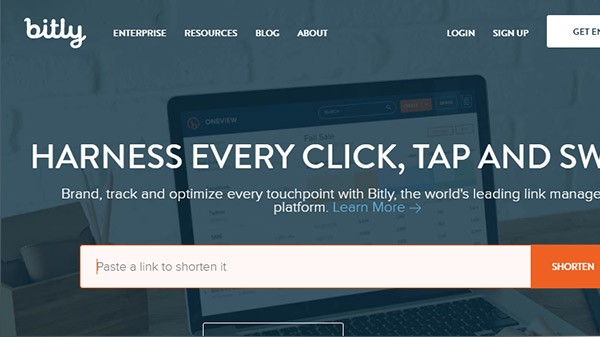
Bit.ly

Bit.ly is one of the most popular URL shorteners which is available out there on the market. All you need to do to shorten your link is to paste the URL in the space given on the website. After that click the ‘Shorten’ tab. You can then copy your newly shortened URL on the clipboard to use it later. You can try this for free on the website. You can also use its premium version to go beyond the basic. The premium feature will remove the ‘bit.ly’ from the link presented to you. As a result, you will able to take full control of your link.

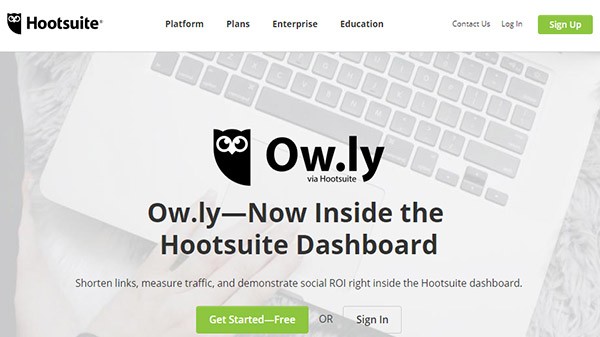
Ow.ly

This is another platform which you can use to shorten your link. Previously, the service was available for all, but recently, they have moved to HootSuite to increase the security. To use the service, you first need to sign up for the HootSuite account. You can again access all the service on this platform for free. Apart from URL shortening service, HootSuite offers a lot many features. HootSuite also works as a platform to manage all the social media sites. You can access all your social media accounts from one place, isn’t that a great additional benefit?
We always choose google for best result but now as google URL shorten er is shutting down so we recommend you to chose these one to have best result not like google but after google it must be give the same result.
Techtificator is bring the best for you so don’t forgot to follow and subscribe our blog.